Идеологические нарративы крестьянских восстаний 1920-1930 гг. в советском Казахстане (на примере восстания Ф. Толстоухова)
Научная статья
Просмотры: 349 / Загрузок PDF: 168DOI:
https://doi.org/10.32523/3080-129X-2026-155-2-143-160Ключевые слова:
Восточный Казахстан, крестьянские восстания, Толстоухов, коллективизация, идеологические нарративы, протестное движениеАннотация
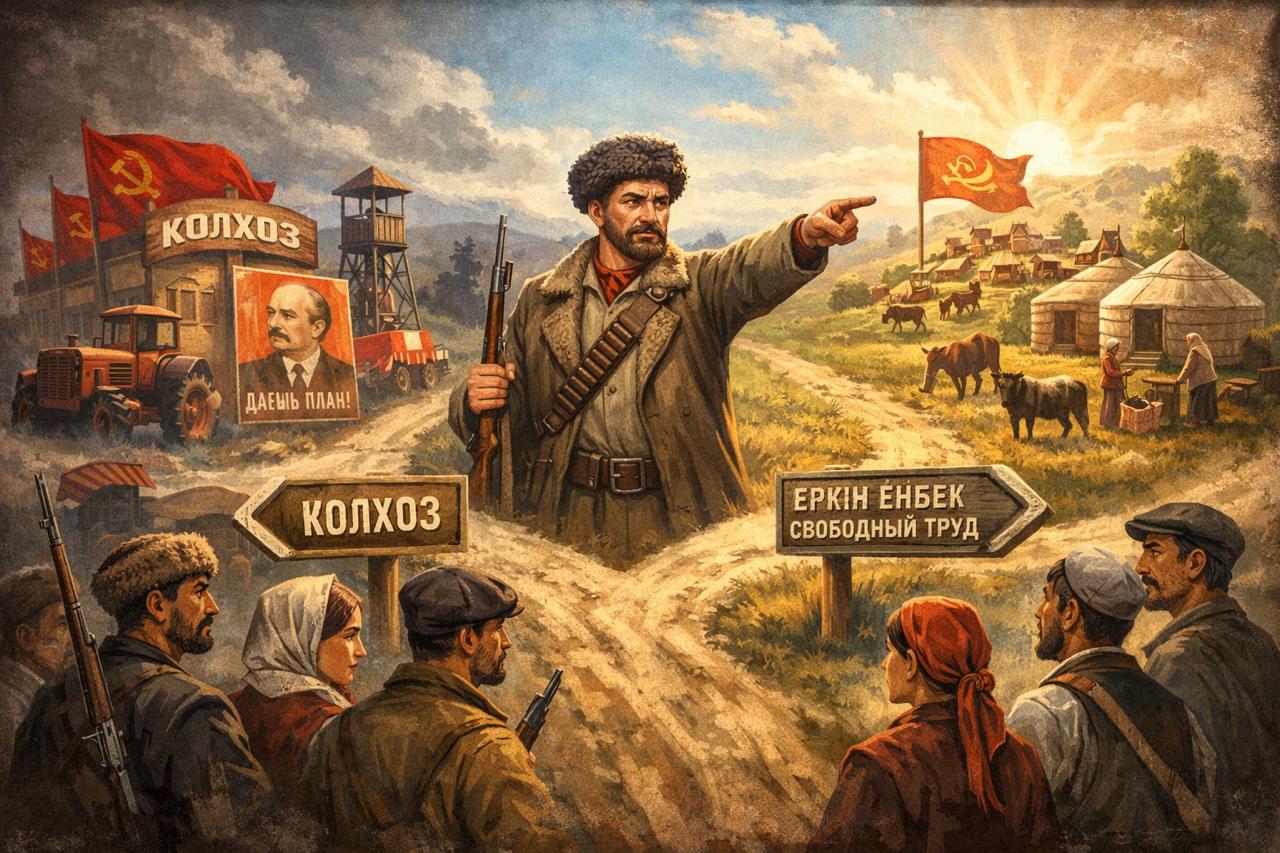
В статье исследуются идеологические нарративы крестьянских вооружённых выступлений в советском Казахстане в 1920-1930-х гг. на примере восстания под руководством Ф. Толстоухова. Актуальность работы обусловлена необходимостью углублённого анализа повстанческого движения периода коллективизации не только как социально-экономического явления, но и как специфической формы политического и идеологического самоопределения крестьянства. Цель исследования заключается в реконструкции идейных установок, мотивационных моделей и поведенческих стратегий участников восстания, а также в выявлении особенностей формирования их политической платформы. Методологическую основу исследования составляют принципы историзма, системности и междисциплинарного подхода, а также элементы микроисторического и нарративного анализа. Источниковую базу формирует широкий круг архивных материалов, включая документы центральных и региональных архивов Республики Казахстан, а также архивно-следственные дела органов Объединённого государственного политического управления (далее ОГПУ), содержащие протоколы допросов, оперативные сводки, донесения и агитационные материалы повстанцев. Привлечение данных источников позволило не только реконструировать ход событий, но и выявить внутреннюю логику и смысловые основания протестного поведения. Особое внимание уделено анализу политической платформы повстанцев, их лозунгов, воззваний, слухов и форм агитации, отражающих специфику восприятия советской власти, политики коллективизации и социально-экономических преобразований конца 1920-х – начала 1930-х гг. Установлено, что идеология восстания носила сложный характер, сочетая элементы антисоветской риторики с представлениями о «справедливой» крестьянской власти, «свободном труде» и восстановлении традиционных форм хозяйствования. Показано, что в сознании участников движения советская власть не отрицалась полностью, а подвергалась переосмыслению через призму локального опыта и социальных ожиданий. В результате исследования делается вывод о том, что крестьянские протестные движения данного периода представляли собой не только реакцию на форсированные социально-экономические преобразования, но и форму альтернативного политического мышления, укоренённого в крестьянской среде и проявлявшегося в попытках конструирования собственной модели власти и социального порядка. Полученные результаты расширяют представления о характере и содержании выступлений против коллективизации в Казахстане и вносят вклад в развитие историографии повстанческого движения советского периода.
Скачивания
Библиографические ссылки
Atantayeva B., Akhmetova R., Shcheglova T., Bоtаbеkоvа A. Protest sentiments and survival strategies of the Kazakh population in the 1929-1930s: behavioral motives and forms of resistance. Gumilyov Journal of History. 2025. Т.152, no.3, рр.60-78. https://doi.org/10.32523/3080-129X-2025-152-3-60-78 DOI: https://doi.org/10.32523/3080-129X-2025-152-3-60-78
Allaniyazov T. Direktivy Semipalatinskogo opersektora OGPU kak istochnik po izucheniiu vooruzhennykh vystuplenii kazakhskikh sharua v period kollektivizatsii. In: Kazakhstan on the Path to State Independence: History and Modernity. Materialy Mezhdunarodnoi nauchno-prakticheskoi konferentsii. Semipalatinsk. 2001. chast II. рр.217-222.
Allaniyazov T., Taukenov A. Poslednii rubezh zashchitnikov nomadizma. Istoriia vooruzhennykh vystuplenii i povstancheskikh dvizhenii v Kazakhstane (1929-1931 gody). Almaty: OO «OST – XXI wek». 2009. 424 p.
Allaniyazov T. «Doklad o boevykh deistviiakh operativnoi gruppy v Kazakhstane v marte, aprele i mae 1930 goda», kak istoricheskii istochnik. Bulletin of L.N. Gumilyov Eurasian National University. Historical Sciences. Philosophy. Religious Studies. 2022. T.141, No.4, рp.7-21. https://doi.org/10.32523/2616-7255-2022-141-4-7-21 DOI: https://doi.org/10.32523/2616-7255-2022-141-4-7-21
Allaniyazov T. Protiv diletantizma v izuchenii istorii narodnykh vosstanii 1929–1931 gg. Al-Farabi Kazakh National University. Journal of history. 2023. T.108(1), рp.196-205. https://bulletin-history.kaznu.kz/index.php/1-history/article/view/1653/932
Allaniyazov T. Vooruzhennye vystupleniia i povstancheskie dvizheniia 1929-1931 godov v Kazakhstane: istoriografiia i istochnikovedenie. Karaganda: Arko Printing House LLP, 2024. 222 p.
Allaniyazov T. Publikatsiia dokumentov iz arkhivno-sledstvennykh del na uchastnikov vooruzhennykh vosstanii 1929-1931 godov: dostizheniia i proschety. Al-Farabi Kazakh National University. Journal of history. 2025. Vol.116(1), рp.242-252. https://bulletin-history.kaznu.kz/index.php/1-history/article/view/1996/1077
Allaniyazov T. Narodnye vosstaniia i protesty 1928-1932 gg. v Kazakhstane. Gumilyov Journal of History. 2025. Vol.153, No.4, рp.91-110 https://doi.org/10.32523/3080-129X-2025-153-4-91-110 DOI: https://doi.org/10.32523/0eqq3372
Atantayeva B., Botabekova A., Turlybaev M. Semei okrugіnde auyl sharuashylyғyn ұzhymdastyru: әkіmshіlіk ozbyrlyқ zhәne onyң saldary (1928-1930 zhzh.). Bulletin of Shakarim University. Series: Historical Sciences. 2024. No.1, рp.74-91. https://history.shakarim.kz/index.php/my/article/view/52/16
Baisarina K., Karibayev M., Turlybayev M. Semei okrugіndegі sharualardyң auyldy kүshtep modernizatsiialau kezeңdegі қarsylyғy (1929-1931 zhzh.). Gumilyov Journal of History. 2025. Vol.150, No.1, рp.128-151. https://jhistory.enu.kz/index.php/jHistory/article/view/21/175
Brandenberger D. Rol nasiliia i falsifikatsii pri podgotovke protokolov doprosov epokhi stalinizma. Modern history of Russia. 2023. Vol.13, No.2, рp.376-399. https://doi.org/10.21638/ spbu24.2023.208 DOI: https://doi.org/10.21638/spbu24.2023.208
Viola L. Krestianskii bunt v epokhu Stalina: kollektivizatsiia i kultura krestianskogo soprotivleniia. Moscow: Foundation of the first President of Russia Boris Yeltsin: 2010. 367 p.
Zhanbosinova A. Tolstoukhovskii miatezh v istochnikakh i materialakh. History of the Homeland. 2018. Vol.83, No.3, Pp.192-203. https://otan.history.iie.kz/main/issue/view/19/20
Kindler R. Stalinskie kochevniki: vlast i golod v Kazakhstane / Per. s nem. L. Pantinoi. Moscow. 2017. 382 p.
Nazemtseva E. Istoriia russkoi emigratsii v Kitae 1920-40 gg.: evoliutsiia pravovogo statusa. Human Kapital. 2012. No. 5 (41), Pp. 198-205.
Neuslyshannye golosa: Documents from the Smolensk Archive. Kn. 1: 1929. Kulaki i partiytsy. Sost. C. Maksudov. Ann Arbor: Ardis. 1987. 286 p.
Omarkanova A., Zhanbosinova A. Listovki, vozzvaniia i proklamatsii v derevne v kontse 1920-kh − nachale 1930-kh gg. (na primere Kazakhskoi sovetskoi avtonomii). Izvestiya of Altai state university. 2024. No5(139), рp.41-47. 10.14258/izvasu(2024)5-05
Pianciola N., Zharassov A. Neulovimye miatezhniki: issledovanie vosstanii nakanune Velikogo goloda v Kazakhstane (1929-1931 gg.). Al-Farabi Kazakh National University. Journal of history. 2020. Vol.97, No.2, рp.34-43. https://bulletin-history.kaznu.kz/index.php/1-history/article/ view/914/654 DOI: https://doi.org/10.26577/JH.2020.v97.i2.04
Teplyakov A. Deiatelnost organov VChK-GPU-OGPU-NKVD (1917–1941 gg.): istoriograficheskie i istochnikovedcheskie aspekty. Novosibirsk State University of Economics and Management. Novosibirsk: NSUEM, 2018. 434 p.
Опубликован
Выпуск
Раздел
Лицензия
Copyright (c) 2026 Б. Атантаева, Р. Ахметова, А. Ботабекова

Это произведение доступно по лицензии Creative Commons «Attribution-NonCommercial-NoDerivatives» («Атрибуция — Некоммерческое использование — Без производных произведений») 4.0 Всемирная.