
Түрік ұлтшылдығының тарихи және идеологиялық тамырлары
Ғылыми мақала
Қаралымдар: 1291 / PDF жүктеулері: 1098DOI:
https://doi.org/10.32523/3080-129X-2026-154-1-76-93Түйін сөздер:
Nationalism , Ottomanism, Turkishness, Islam, Secularism, Kemalism, Ottoman Empire, Türkiye, WesternizationАңдатпа
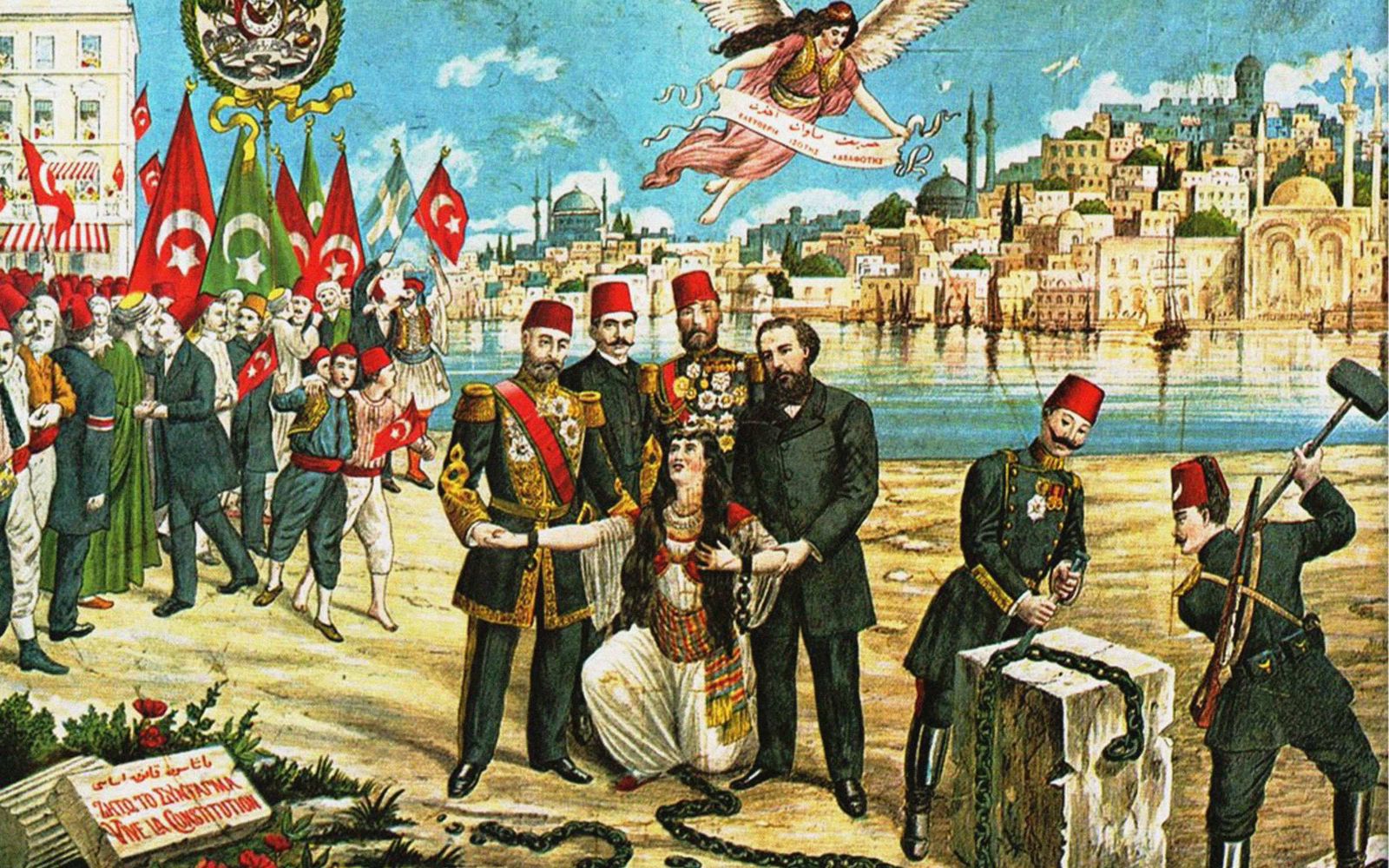
Бұл мақалада қазіргі түрік ұлтшылдығының идеологиялық тамырлары мен негіздері қарастырылып, талданады. Зерттеу тақырыпқа қатысты дерек көздері мен әдебиеттерге, сонымен қатар ұлтшылдыққа қатысты іргелі теорияларға негізделеді. Осман дәуірінде империяның көп ұлтты және көп конфессиялы халқын этникалық шығу тегіне қарамастан ортақ отаны және османдық ұлт (османдық) байланыстырды. Алайда Осман империясының құлдырауымен қатар грек, армян, серб ұлтшылдығының күшеюі түрік ұлтшылдығының пайда болуына алып келді. 19 ғасырдың соңында осман зиялыларының түрік ұлтшылдығын насихаттауы османшылдықтың маңызының құлдырауына ықпал етті. Бұған қоса осман дәуірінен республикалық кезеңге өту түрік қоғамының этнизациялануымен ерекшеленді. Мұстафа Кемал мен оның ізбасарлары жүргізген ұлттық саясаты мен мемлекет құру жобасы Түркияны артта қалған, шығыстық және исламдық қоғамнан заманауи, прогрессивті, батыстық және зайырлы қоғамға айналдыруды көздеді. Зерттеу нәтижелері Түрік Республикасының құрылуы бір кезеңнен екінші кезеңге жәй өту ғана емес, түрік ұлттық болмысына негізделген жаңа ұлттың құрылуының бастамасы екенін көрсетті. Кемалистер этникалық азшылықтарды түріктендіру арқылы елді этникалық және мәдени біртұтастандыруға айрықша басымдық берді. Зерттеу нәтижелері кемалистік ұлтшылдықтың осман дәуірі мен Исламды елдің қоғамдық-саяси өмірінен ығыстыруды және шеттетуді мақсат еткенін көрсетті. Алайда зерттеу кемалистердің бұл бағыттағы саясатының кері нәтижелерді алып келгенін көрсетті. Атап айтқанда осман тарихы мен исламды ығыстыру әрекеттері елде балама саяси дискурстар мен күштердің пайда болуына алып келді. Ердоғанның жетекшілігіндегі Әділет және даму партиясының (ӘДП) билікке келуі елдің дәстүрлі кемалистік курстан ауытқып, басқа бағытқа қарай жылжуына тікелей ықпал етті.
Downloads
Әдебиеттер тізімі
Akçura Y. Three Types of Policy. Ankara: TT Kurumu Yayınları. 1976. 55 p.
Akıllı E. State Identity and Foreign Policy in Turkey. Ankara: Nobel Akademik Yayıncılık. 2013. 189 p.
Aktar A., Kızılyürek N., Özkırımlı U. Introduction. In: Nationalism in the Troubled Triangle. Cyprus, Greece and Turkey. Edited by Ayhan Aktar, Niyazi Kızılyürek, Umut Özkırımlı. Palgrave Macmillan UK. 2010. Pp.xiii–xxiii. https://doi.org/10.1057/9780230297326 DOI: https://doi.org/10.1057/9780230297326
Aktar A. Conversion of a ‘Country’ into a ‘Fatherland’: The Case of Turkification Examined, 1923-1934. In: Nationalism in the Troubled Triangle. Cyprus, Greece and Turkey. Edited by Ayhan Aktar, Niyazi Kızılyürek, Umut Özkırımlı. Palgrave Macmillan UK. 2010. Pp.21‒35. https://doi.org/10.1057/9780230297326_2. DOI: https://doi.org/10.1057/9780230297326_2
Atay F. Çankaya. 6. Edition, Istanbul: Pozitif Yayınevi. 2023. 591 p.
Aydemir Ş. The Man Who Searched for Water. 59. Edition, Istanbul: Remzi Kitabevi. 2024. 408 p.
Aydin S. The Use and Abuse of Archaeology and Anthropology in Formulating the Turkish Nationalist Narrative. In: Nationalism in the Troubled Triangle. Cyprus, Greece and Turkey. Edited by Ayhan Aktar, Niyazi Kızılyürek, Umut Özkırımlı. Palgrave Macmillan UK. 2010. Pp.36-46. DOI: https://doi.org/10.1057/9780230297326_3
Bali R. The Politics of Turkification during the Single Party period. In: Turkey Beyond Nationalism: Towards Post-Nationalist Identities. Edited by Hans-Lukas Kieser. London – New York: I.B. Tauris. 2006. Pp.43-49. DOI: https://doi.org/10.5040/9780755608010.ch-005
Biran M. The Empire of the Qara Khitai in Eurasian History: Between China and the Islamic World. Cambridge Studies in Islamic Civilization. Cambridge, England: Cambridge University Press. 2005. 279 p.
Bozarslan H. Kemalism, Westernization and Anti-liberalism. In: Turkey Beyond Nationalism: Towards Post-Nationalist Identities. Edited by Hans-Lukas Kieser. London – New York: I.B. Tauris.2006. Pp.28-34 DOI: https://doi.org/10.5040/9780755608010.ch-003
Buçukçu Ö. Nationalism: History, Theory, and Fundamental Issues. Istanbul: Ketebe Kitabevi. 2020. 220 p.
Çalen M. The Emergence of Turkish Nationalism According to Yusuf Akçura and Ziya Gökalp, and a Proposal for Periodization of the Emergence Period of Turkish Nationalism. Milliyetçilik Araştırmaları Dergisi. Spring. 2019. No.1(1), рp.1-16.
Çolak Y. Nationalism and the State in Turkey: Drawing the Boundaries of ‘Turkish Culture’ in the 1930s. Studies in Ethnicity and Nationalism. 2003. Vol.3, no.1, pp.1–19. DOI: https://doi.org/10.1111/j.1754-9469.2003.tb00034.x
Çolak Y. Ottomanism vs. Kemalism: Collective Memory and Cultural Pluralism in 1990s Turkey. Middle Eastern Studies. 2006. July. Vol.42, no.4, pp.587-602. DOI: https://doi.org/10.1080/00263200600642274
Dinç P. Hünler O. Introduction by the Editors. In: The Republic of Turkey and its Unresolved Issues. P. Dinç and O. Hünler (eds.). Singapore: Palgrave Macmillan. 2025. Pp.1-15. DOI: https://doi.org/10.1007/978-981-96-1583-4_1
Erimtan C. “Hittites, Ottomans and Turks: Ağaoğlu Ahmed Bey and the Kemalist construction of Turkish nationhood in Anatolia”. Anatolian Studies. 2008. Vol.58, рp.141–171. DOI: https://doi.org/10.1017/S0066154600008711
Foss C. “Kemal Atatürk: Giving a New Nation a New History”. Middle Eastern Studies. 2014. Vol.50, no.5, pp.826-847. https://doi.org/10.1080/00263206.2014.913574 DOI: https://doi.org/10.1080/00263206.2014.913574
Georgeon F. The Origins of Turkish Nationalism: Yusuf Akçura (1876-1935). Istanbul: Tarih Vakfı Yurt Yayınları. 1996. 226 p.
Gökalp Z. Becoming Turkish, Becoming Islamic, Becoming Modern. Istanbul: Toker Yayınları. 1988. 80 p.
Golden P. An Introduction to the History of the Turkic Peoples: Ethnogenesis and State Formation in Medieval and Early Modern Eurasia and the Middle East. Gôttingen, Wiesbaden: Harrassowitz. 1992. 483 p.
Gürpinar D. Ottoman/Turkish Visions of the Nation, 1860-1950. Palgrave MacMillan. 2013. 308 p. DOI: https://doi.org/10.1057/9781137334213
Hanioğlu Ş. Preparation for a Revolution: The Young Turks, 1902-1908. New York: Oxford University Press. 2001. 273 p.
Hanioğlu S. Turkism and the Young Turks, 1889-1908. In: Turkey Beyond Nationalism: Towards Post-Nationalist Identities. Edited by Hans-Lukas Kieser. London – New York: I.B. Tauris. 2006. Pp.3–19. DOI: https://doi.org/10.5040/9780755608010.ch-001
Hanioğlu Ş. Ataturk: An Intellectual Biography. New Jersey: Princeton University Press. 2011. 273 p. DOI: https://doi.org/10.1515/9781400838172
Heywood A. Political Ideologies. An Introduction. 7th edition. Red Globe Press: Macmillan International. 2021. 292 p.
Kadioğlu A. The Paradox of Turkish Nationalism and the Construction of Official Identity. Middle Eastern Studies. 1996. Vol.32, no.2, pp.177-193. https://doi.org/10.1080/00263209608701110 DOI: https://doi.org/10.1080/00263209608701110
Kaldellis A. The New Roman Empire: A History of Byzantium. New York: Oxford University Press. 2023. 1133 p. DOI: https://doi.org/10.1093/oso/9780197549322.001.0001
Meram A. History of Turkism and Turkist Struggles. Istanbul: Kültür Kitabevi. 1969. 262 p.
Özdoğan G. From “Turan” to “Gray Wolf”: Turkish Nationalism During the One-Party Period (1931-1946). I. Kaplan (trans.). 5. Edition. Istanbul: İletişim Yayınları. 2019. 352 p.
Özdoğan G. “Turkish Nationalism Reconsidered: The ‘Heaviness’ of Statist Patriotism in Nation-Building”. In: Nationalism in the Troubled Triangle. Cyprus, Greece and Turkey. Edited by Ayhan Aktar, Niyazi Kızılyürek, Umut Özkırımlı. Palgrave Macmillan UK. 2010. Pp.47–60. DOI: https://doi.org/10.1057/9780230297326_4
Kieser H-L. Introduction. In: Turkey Beyond Nationalism: Towards Post-Nationalist Identities. Ed. by Hans-Lukas Kieser. London – New York: I.B. Tauris. 2006a. Pp.vii–xvii. DOI: https://doi.org/10.5040/9780755608010
Kieser H-L. An Ethno-nationalist Revolutionary and Theorist of Kemalism: Dr Mahmut Esat Bozkurt (1892-1943). In: Turkey Beyond Nationalism: Towards Post-Nationalist Identities. Ed. by Hans-Lukas Kieser. London – New York: I. B. Tauris. 2006b. Pp.20–27. DOI: https://doi.org/10.5040/9780755608010.ch-002
Parla T. Ziya Gökalp, Kemalism and Corporatism in Turkey. Istanbul: İletişim Yayınları. 1993. 232 p.
Saray M. Atatürk’s Understanding of Turkishness and Nationalism. Ankara: Atatürk Araştırma Merkezi. 2022. 219 p.
Tokdoğan N. Neo-Ottomanism and the Politics of Emotions in Turkey: Resentment, Nostalgia, Narcissism. Cham: Palgrave Macmillan. 2024. 183 p. DOI: https://doi.org/10.1007/978-3-031-48723-1
Uyanık M. Three Styles of Politics: Turkishness as a Design of a Superordinate Identity. Istanbul: Metropol Yayınları. 2003.147p.
Uzer U. An Intellectual History of Turkish Nationalism Between Turkish Ethnicity and Islamic Identity. Salt Lake City: UUtah Press. 2016. 261 p. DOI: https://doi.org/10.1353/book46323
Uzer U. Conservative Narrative: Contemporary Neo-Ottomanist Approaches in Turkish Politics. Middle East Critique. 2020. Vol.29, no.3, pp.275-290. https://doi.org/10.1080/19436149.2020.1770444 DOI: https://doi.org/10.1080/19436149.2020.1770444
Zeydanlıoğlu W. The white Turkish man’s burden; Orientalism, Kemalism and the Kurds in Turkey. In: Neocolonial Mentalities in Contemporary Europe? Language and Discourse in the Construction of Identities. Edited by Guido Rings and Anne Ife. Newcastle upon Tyne, UK: Cambridge Scholars Publishing. 2008. Pp.155–174.
Zürcher E. Ottoman Sources of Kemalist Thought. In: Late Ottoman Society: The Intellectual Legacy. Edited by Elisabeth Özdalga. London: Routledge Curzon. 2005. Pp.14–27.
Zürcher E. The Young Turk Legacy and Nation Building. From the Ottoman Empire to Atatürk’s Turkey. New Work: I.B. Tauris & Co Ltd. 2010. 351 p. DOI: https://doi.org/10.5040/9780755610761
Zürcher E. Young Turk Governance in the Ottoman Empire during the First World War. Middle Eastern Studies. 2019a. Vol.55, no.6, pp.897-913. https://doi.org/10.1080/00263206.2019.1590820 DOI: https://doi.org/10.1080/00263206.2019.1590820
Zürcher E. The Young Turk revolution: comparisons and connections. Middle Eastern Studies. 2019b. Vol.55, no.4, pp.481–498. https://doi.org/10.1080/00263206.2019.1566124 DOI: https://doi.org/10.1080/00263206.2019.1566124
Жүктеулер
Жарияланды
Журналдың саны
Бөлім
Лицензия
Авторлық құқық (c) 2026 Ғ. Жұматай ,Я. Сари, А. Ысқақ

Бұл жұмыс Creative Commons Attribution-NonCommercial-NoDerivatives 4.0 Дүние жүзінде.