Transition from the Soviet Model of Museums to the Modern Kazakhstani Model: Historical and Cultural Analysis
Research Article - Published online first 01.02.2026.
Views: 529 / PDF downloads: 157DOI:
https://doi.org/10.32523/3080-129X-2026-154-1-01.02.2026-2Keywords:
museums, memoriality, acculturation, identity, reform, ideology, representation, sovereignty, exhibitions, digitalization, reflectionAbstract
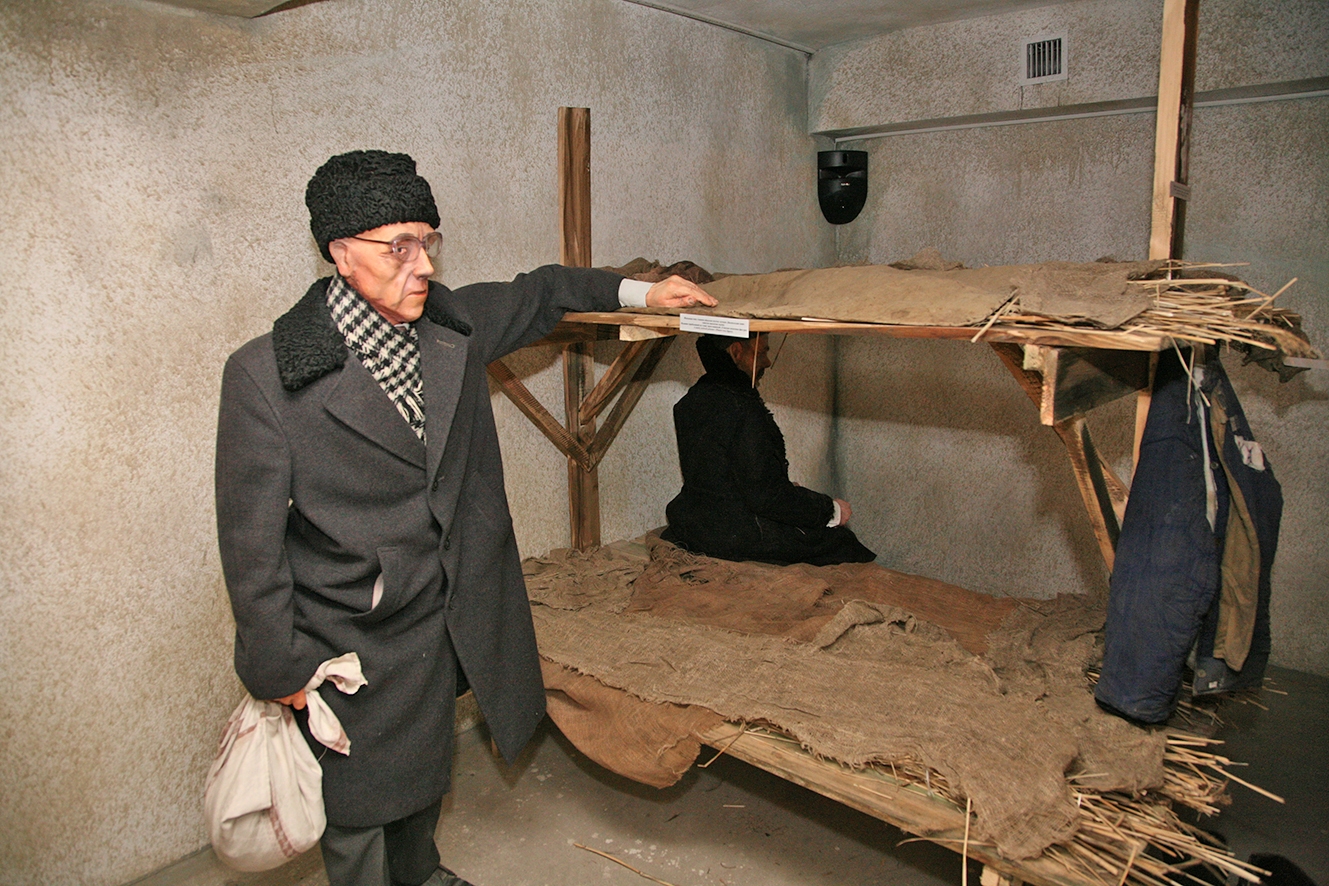
The article is devoted to the historical and cultural analysis of the transformation of the museum sector of Kazakhstan in the post-Soviet period. The research aims to identify the key stages of the transition from the Soviet model of museums, focused on ideological representation and centralized management, to the modern Kazakh museum as an institution of cultural memory, identity and public history. For the first time, the institutional, substantive, and conceptual changes that have occurred since 1991 have been analyzed within the framework of a unified approach, as well as the factors that influenced the formation of a new museum paradigm in the context of independence. The article describes the Soviet museums, which were a strictly centralized system subordinate to government agencies and used as an instrument of ideological control. Their main function was to broadcast the official historical version corresponding to the party line. Historical events were presented through the prism of class struggle, socialist construction, and the cult of heroism, especially in relation to the revolution, the Civil War, and the Great Patriotic War. One of the central places in the study is occupied by the question of the representation of historical memory: how attitudes towards such topics as the Famine of 1932-1933, Stalin's repressions, the Alash movement, and the deportation of ethnic minorities have changed. These events were previously marginalized or hushed up, but today they are becoming part of the museum narrative, reinterpreted through the prism of national identity and cultural sovereignty. The study reveals that today museums are increasingly viewed as not only repositories of artifacts, but also as spaces of reflection and dialogue with the past. In addition, they perform educational, communicative and memorial functions, providing a connecting thread between generations. Their activities contribute to the formation of a stable historical culture based on a critical understanding of both heroic and tragic pages of the past. Through museum practices, collective work with traumatic experiences is carried out, which is especially important in a multinational society striving for consolidation. The article also details the current challenges of the museum industry: lack of funding, institutional instability, lack of qualified personnel, lagging behind international standards in the field of digitalization and curatorial practice. The initiatives of the state policy, including "Rukhani Zhangyru" and "Uly Dala Eli", are considered as attempts to update the museum infrastructure and the semantic agenda. The scientific novelty of the research lies in the systematic formulation of issues of identity, memory and cultural transformation through the museum context. The work can be useful for historians, cultural scientists, museologists and specialists in the field of humanitarian policy of the post-Soviet space.
Downloads
References
Assanova D., Zhanguttin B. Women’s Museums in Kazakhstan: Prospects in the New Digital Age. https://www.tandfonline.com/doi/full/10.1080/13500775.2020.1743063. Data obrashcheniia 15.07.2025.
Bennett T. The Birth of the Museum: History, Theory, Politics. Routledge. England. 1995. 244 p.
Clifford J. Routes: Travel and Translation in the Late Twentieth Century. Amazon. USA. 1997. 416 p.
Hooper-Greenhill E. Museums and the Interpretation of Visual Culture. Routledge. England. 1992. 216 p.
Hooper-Greenhill E. Museums and the Shaping of Knowledge. Routledge. England. 1995. 244 p.
Huyssen A. Present Pasts: Urban Palimpsests and the Politics of Memory. Amazon. USA. 2003. 192 p. DOI: https://doi.org/10.1515/9781503620308
Kreps C. Liberating Culture: Cross-Cultural Perspectives on Museums, Curation and Heritage Preservation. Routledge. England. 2007. 208 p.
Macdonald Sh. A Companion to Museum Studies. Wiley-Blackwell. USA. 2006. 592 p. DOI: https://doi.org/10.1111/b.9781405108393.2006.00002.x
Macdonald Sh. Memorylands: Heritage and Identity in Europe Today. Routledge. England. 2013. 320 p.
Satubaldin A., Sakhiyeva K. The Museum System of Modern Kazakhstan: Classification and Typology of Museums. Muzeológia a kultúrne dedičstvo. 2021. No.9, pp.79-89. DOI: https://doi.org/10.46284/mkd.2021.9.2.5
Dzhumataeva D. Perspektivnye napravlenija v proektirovanii sovremennyh muzeev iskusstv. In: Sejfullinskie chtenija – 9: a new vector for the development of higher education and science. Materials of the Republican scientific-theoretical conference, held on the 1st day of the First President of the Republic of Kazakhstan. Astana. 2013. T.2, р.1, рp.120-121.
Dujsenova N., Smagulov B. Nekotorye aspekty razvitija muzejnoj sfery v Kazahstane v 1930-h – 1950-h gg. Asian Journal "Steppe Panorama". 2022. No.3(31), pp.70-80. https://doi.org/10.51943/2710-3994_2022_31_3_70-80 DOI: https://doi.org/10.51943/2710-3994_2022_31_3_70-80
Kapyshev A., Iskakov K. Osnovnye jetapy razvitija muzeev Kazahstana v period nezavisimosti. Science and Reality. 2021. No.1(5), pp.132-136.
Morozov I., Sleptsova I. S pristrastiem vgljadyvajas' v proshloe: «ad» i «raj» sovetskoj jepohi v sovremennyh muzejnyh narrativah. Journal of Sociology and Social Anthropology, 2020. No.23(5), pp.195-224.
Postanovlenie Pravitel'stva Respubliki Kazahstan «O sozdanii Respublikanskogo gosudarstvennogo predprijatija «Ғylym ordasy». No.84, at 11.02.2010.
Rusakov V., Rusakova O. Infrastruktura novoj politiki nacional'noj pamjati na postsovetskom prostranstve. K postanovke problemy. Scientific journal "Discourse-Pi". 2020. No.2(39), pp.27-47. https://doi.org/10.24411/1817-9568-2020-10202
Satubaldin A. Muzejnyj mir Kazahstana: osnovnye napravlenija dejatel'nosti. Bulletin of the Kemerovo State University of Culture and Arts. 2020. No.52, pp.120-129.
Semjonov P. Razvitie muzejnoj sfery v Sovetskij period (1917-1991). Eurasian Scientific Association. 2020. No.5-7(63), pp.551-554.
Fajzullina G. Muzeologija kak nauka: kazahstanskie realii. Journal of history. 2020. No.1(96), pp.126-136. DOI: https://doi.org/10.26577/JH.2020.v96.i1.16
Sherstennikova E. Formy muzejnoj kommunikacii v MAJe ‒ IJe AN SSSR v pervoj polovine XX veka. Kunstkamera. 2022. No.3(17), pp.98-109. https://doi.org/10.31250/2618-8619-2022-3(17)-98-109 DOI: https://doi.org/10.31250/2618-8619-2022-3(17)-98-109
Downloads
Published
Issue
Section
License
Copyright (c) 2026 Ye. Ibrayev, G. Nurusheva

This work is licensed under a Creative Commons Attribution-NonCommercial-NoDerivatives 4.0 International License.