On the issue of the results of the re-election of the Soviets in 1927 in the Cossack ASSR
Research Article
Views: 352 / PDF downloads: 265DOI:
https://doi.org/10.32523/3080-129X-2026-154-1-119-137Keywords:
Kazakh ASSR, electoral campaign, archival documents, disenfranchised persons, elections, instructionAbstract
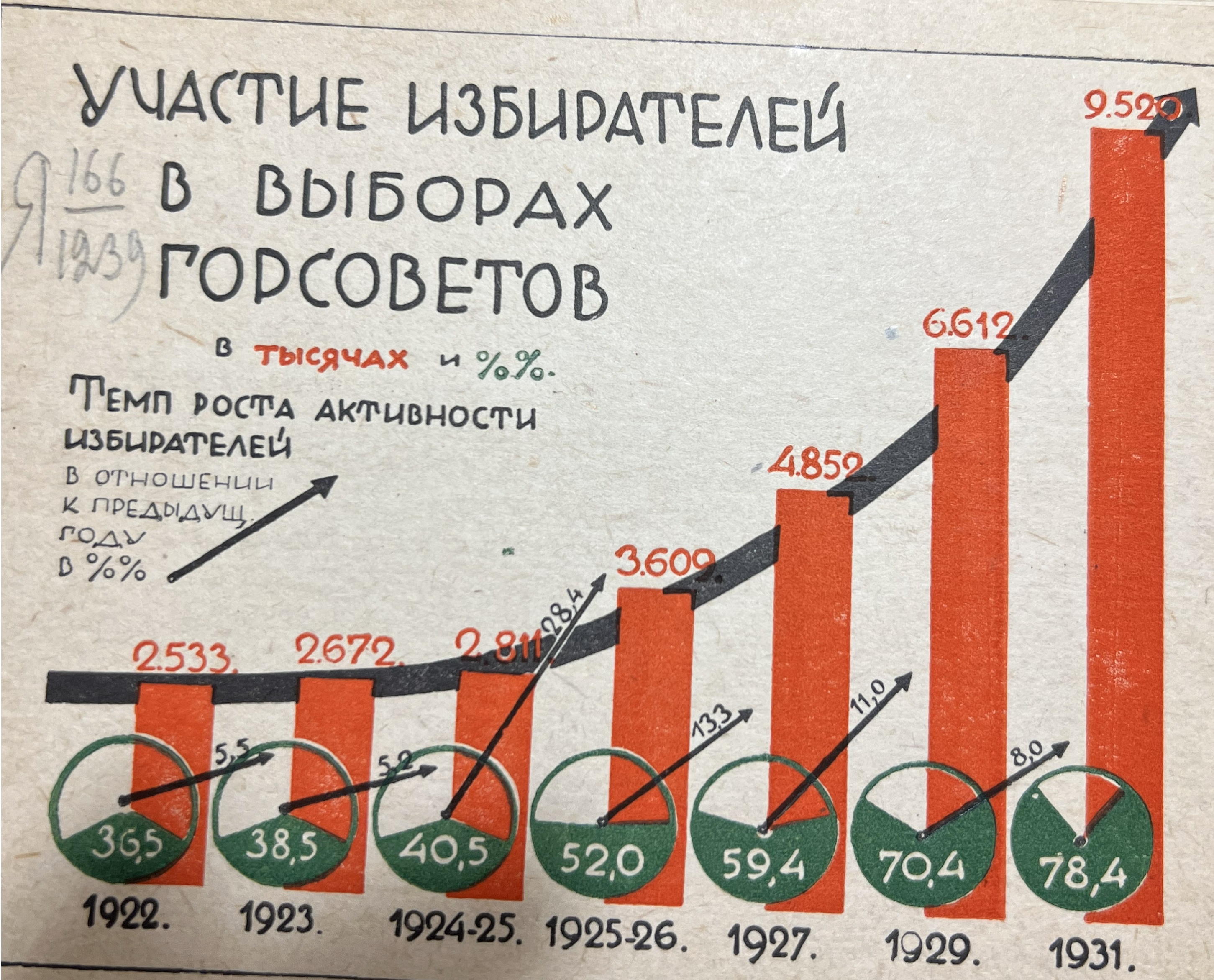
The relevance of the author’s research lies in the formation of a historiographical understanding of the emergence of the Soviet electoral system and the Soviet state power apparatus. The historiography of electoral history has accumulated substantial scholarly experience reflected in published articles, monographs, and defended dissertations across a broad academic field; this topic has also been actively developed in Kazakhstan. Despite a certain degree of critical assessment, it can be noted that the principle of popular sovereignty within the Soviet electoral system became a political platform of state democracy implemented from above. The controversial nature of the issue lies in the question of whether the electoral system formed in the RSFSR as a whole, and in the Kazakh ASSR as part of the union system, genuinely contained elements of popular self-government. The key research question and scientific novelty of the article consist in the analysis of the 1926-1927 electoral campaign based on the content of an archival document introduced into scholarly circulation for the first time, identified in the Archive of the President of the Republic of Kazakhstan. The narratives of the presented document and the authors’ research analysis reveal the multilevel relationships between state authorities and the electorate through a comparative examination of data that confirm or refute specific fragments of the document. The article examines the 1926-1927 electoral campaign in the Kazakh ASSR in the context of the tightening of Soviet electoral policy, taking into account the Instruction on Elections approved on November 4, 1926, by the Presidium of the All-Russian Central Executive Committee (VTsIK). The new Instruction, which replaced the 1925 document, introduced mechanisms of stricter control, including the expansion of categories of persons deprived of electoral rights (including those using hired labor), detailed procedures for compiling lists of lishentsy and for appealing unlawful deprivation of voting rights, the strengthening of the role and significance of electoral commissions, as well as the introduction of quorum requirements for electoral assemblies (at least 35% of eligible voters). The identified archival document reconstructs the phased implementation of the electoral campaign calendar plan, the formation of electoral commissions, the determination and format of their activities at the local level – including agitation work – the conduct of meetings, compliance with electoral procedures, mandatory oversight by authorized representatives, and their actions in response to identified violations. One of the outcomes of the 1926-1927 elections was an increase in the number of individuals deprived of electoral rights. The uniqueness of the published document lies in the numerous examples cited by authorized officials in their reports concerning cases of disenfranchisement. Such large-scale deprivation of citizens’ electoral rights reflects not only the provisions of the Instruction on Elections but also the arbitrary interpretation of its clauses by electoral commissions at the gubernial, district, city, and rural (aul) levels. Virtually all electoral campaigns were accompanied by talasovki and clan-based confrontations in rural communities both during the pre-election period and in the course of the elections themselves. The article is based on a variational-critical approach that combines the analysis of state sources with regional specificity. The author’s historiographical review demonstrates sustained scholarly interest in the problem under study and its significance for the historical research community.
Downloads
References
Sailaubay Y., Zhanbossinova A. Kazakh nomads, social class transformations and Soviet power during the period of collectivization. Central Asian Survey. 2026. Vol.45(1). Рр.3-23. https://doi.org/10.1080/02634937.2024.2407967. DOI: https://doi.org/10.1080/02634937.2024.2407967
Ablazhey N., Zhanbossinova A. “Situatsiia stabilnaia»: vybory v sovety v Akmolinskoi gubernii 1926/1927 goda. Historical Courier. 2024. No.3, рр.64-91. http://istkurier.ru/data/2024/ISTKURIER-2024-1-05.pdf
Ablazhey N., Zhanbossinova A. Izbiratelnaia kampaniia i rodovoe protivostoianie v Kazakhskoi ASSR. Bulletin of St. Petersburg University. History. 2025. Vol.70(2), pp.421-444.
Vybory v Sovety po RSFSR v 1927 g. The All-Russian Election Commission under the Presidium of the Central Executive Committee. Moscow: Iskra revolyutsii. 1928 98 p.
Itogi vyborov v gorsovet 1927 g. Moscow-Leningrad: Moskovsky Rabochy. 1928. 295 p.
Itogi vyborov v Sovety RSFSR v 1927 g. Moscow: Edition of the Central Election Commission, 1929, 75 p.
Kuchkin A. Sovetizatsiia kazakhskogo aula 1926-1929 gg. Questions of history. 1946. No.10. pp.3-23.
Salamatova M. Vybory v Sovetskoi Rossii: zakonodatelstvo i praktika realizatsii (1918-1936 gg.). Novosibirsk: NSUEU. 2016. 338 p.
Salamatova M. “Transformatsiia nauchnykh podkhodov v noveishei otechestvennoi istoriografii k izucheniiu stanovleniia sovetskoi izbiratelnoi sistemy”. Historical Courier.2025. No.1(39), pp.106-135.
Published
Issue
Section
License
Copyright (c) 2026 М. Izguttinov, Kh. Maslov

This work is licensed under a Creative Commons Attribution-NonCommercial-NoDerivatives 4.0 International License.