Some sources of Kurbangali Khalidi’s work “Tawarikh-i khamsa-i sharqi”
Research аrticle
Views: 127 / PDF downloads: 105DOI:
https://doi.org/10.32523/3080-129X-2026-156-3-115-138Keywords:
Kurbangali Khalidi, Tawarikh-i hamsa-i sharqi, history, Ibn Khaldun, Katib Chelebi, Mirza Muhammad Haidar DuglatAbstract
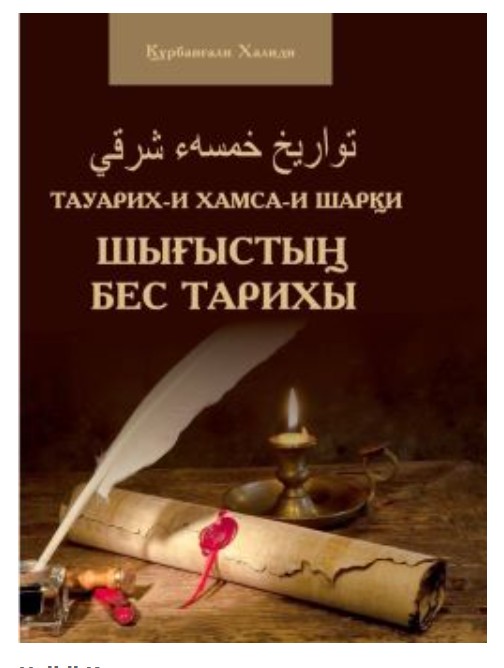
The article examines the source-based foundations of the work “Tawarikh-i hamsa-i sharqi” (The History of the Five Eastern Peoples) by the historian, ethnographer, and religious figure Qurbangali Khalidi, who lived in the second half of the 19th and early 20th centuries. The aim of the research is to identify the written sources used by the author in the sections related to the history of Kazakhstan within this work and to demonstrate their scientific significance for national history. Qurbangali Khalidi is a figure who holds a unique place in the cultural history of pre-revolutionary Kazakhstan; he was a compatriot and contemporary of the great Abay, as well as a scholar and religious figure. He was born in 1846 into a Tatar family in the city of Ayagoz in eastern Kazakhstan and passed away in 1913 in the city of Chuguchak (Tacheng), located in present-day China. Qurbangali Khalidi was a highly educated individual of his time; at the turn of the century, he researched Kazakh history and culture and published historical works such as "Tarikh-i jarida-i jadida" (The New Historical Journal) and “Tawarikh-i hamsa-i sharqi”. These works are important contributions reflecting the historical understanding of the early 20th century. The work "Tawarikh-i hamsa-i sharqi," published in Kazan in 1910, deserves special mention. This labor serves as an important source providing valuable data on the history, historical geography, ethnography, and spiritual and material culture of the Turkic peoples inhabiting the steppe regions of Eurasia. Qurbangali Khalidi wrote his work in the "common language" of the Turkic peoples of the modern era, based on the written heritage of the medieval Chagatai language. Furthermore, the author freely utilized ancient scientific terms from the Arabic and Persian languages. Both Qurbangali Khalidi himself and his work "Tawarikh-i hamsa-i sharqi" remained little known in national historiography for a long time. This was influenced by Soviet ideology as well as the language of the work and its use of the Arabic script. Only after Kazakhstan gained independence did "Tawarikh-i hamsa-i sharqi" become a subject of specialized research. In 1992, an abridged translation of the work into modern Kazakh was published for the first time, and the labor began to enter scientific circulation. Scientific studies dedicated to the scholar and his written heritage have since been published. In the course of the research, information related to the history of Kazakhstan in Qurbangali Khalidi's work "Tawarikh-i hamsa-i sharqi" was compared with data from the historical works of medieval and early modern scholars. Consequently, it was established that the author utilized information from such works as "Tarikh al-Rusul wa al-Muluk" by al-Tabari (10th c.), "Kitab al-Ibar" by Ibn Khaldun (15th c.) , "Rawzat al-Safa" by Mirkhond (15th c.), "Tarikh-i Rashidi" by Mirza Muhammad Haidar Dughlat (16th c.), "Mir'at al-Ka'inat" by Nishandjy-zade (17th c.), "Jihannuma" by Katip Çelebi (17th c.), "Shajara-i Turk" by Abu al-Ghazi Bahadur Khan (17th c.), and "Mustafad al-akhbar" by Shihabuddin Marjani (19th c.). The study identified that the work "Jihannuma" used in "Tawarikh-i hamsa-i sharqi”, for which the author's name was not specified, belongs to the famous Ottoman scholar Katip Çelebi, thereby demonstrating the source-based foundation of the work. As a result, it was determined that Q. Khalidi created an original synthetic historical work by relying on the labors of medieval Muslim and Turkic historians. Additionally, the source-critical and historiographical value of his work was defined.
Downloads
References
Ammash Ṣ. Qutayba ibn Muslim al‑Bahili: the campaigns of the eastern and northern armies in Transoxiana. Iraq: Ministry of Culture and Arts. 1978.
Al‑Narshakhī – Abu Bakr Muhammad ibn Ja‘far al‑Narshakhī. The History of Bukhara. Translation, comments and notes by Sh. Kamoliddin. Archaeological and topographical commentary by E. Nekra sova. Tashkent: SMIA‑SIA, 2011. 600 p.
Al‑Ṭabarī - Annales written by Abu Ja‘far Muhammad ibn Jarir al‑Tabari, edited with others by M. J.Al- de Goeje. Series I–III. Leiden, 1879–1901. 1964.
Al‑Ṭabarī Muhammad ibn Jarir al‑Tabari. The History of Prophets and Kings. Edited by Muhammad Abu al‑Fadl Ibrahim. V.6. Al-Kahira: Dar al-Ma‘rif. 1964.
Ahmed El Shamsy. Rediscovering the Islamic classics: How editors and print culture transformed an intellectual tradition. Princeton University Press. United States of America. 2020. 295 p. DOI: https://doi.org/10.23943/princeton/9780691174563.001.0001
Gamze Mutlu. Cihânnümâ, Topkapı‑Revan manuscript of 1624: Study, Text, and Glossary. (Doktora tezi) − İstanbul Üniversitesi, Sosyal Bilimler Enstitüsü. İstanbul. 2024. 2703 p.
Gibb H.A.R. The Arab invasion of Kashgar in A.D.715. Bulletin of The School of Oriental and African Studies-university of London. Vol.2: 1921-23, pp.467-474. DOI: https://doi.org/10.1017/S0041977X00102320
Duglat Mirza Muhammad Hajdar Duglat. Tarih-i Rashidi. Edited by Dr. Abbasquli Ghaffari Fard. Tehran, 1383. 2004. 860 p.
Erol H.İ. 1798-1850 Printing in Egypt: Publishing and Translation Activities in the Field of History. Journal of Turkish and Middle Eastern Studies. 2020. No.7(2), pp.171-208. DOI: https://doi.org/10.26513/tocd.715230
İnan G. Remarks on the part of Ottoman history in Nişancızâde’s Mir’âtü’l-Kâinât. Kadim. 2022. No.3, рр.107-132. https://doi.org/10.54462/kadim.1074183 DOI: https://doi.org/10.54462/kadim.1074183
Ibn Haldun. Ibn Khaldun’s major historical work, commonly known as Kitāb al‑‘Ibar (or The Book of Lessons) and including the famous Muqaddimah (Prolegomena). 1 tom. Bejrut: Dar әl-Fikr. 2001. 668 р.
Ibn Khaldūn. The Muqaddimah. Manuscript. Istanbul: Süleymaniye Library , Atıf Efendi coll., no. 1936. Ibn Khaldūn. Al-Muqaddima. Correc. by Naṣr al-Hūrīnī. Bulaq, 1274. [1857]. Reprint. 1284 / [1867].
Ibn Khaldūn. Translation of Ibn Khaldūn’s Muqaddima. Translated from Arabic to Ottoman Turkish by Meḥmed Ṣāḥib Pīrīzāde. Bulaq. 1275/ [1858 or 1859].
Karakaş-Özür N. Reflections of Cihannüma: A document analysis]. Journal of Geography, Faculty of Letters, Istanbul University. 2014. No.29, pp.120-144.
Üstüner A. Ottoman geographical studies in the post‑Classical period. Turkish Studies Literature Journal. 2019. No.17(33), рp.41-104.
Muhammad ibn Khāwandshāh al‑Balkhī, known as Mīrkhwand. Rawḍat al‑Ṣafā fī Sīrat al‑Anbiyā wa‑l‑Mulūk wa‑l‑Khalīfa (The Garden of Purity in the Lives of the Prophets, Kings, and Caliphs). Tekhran: 1373 (1994). 1319 p.
Nişancızâde Mehmed Efendi. Mir’âtü’ l-Kâinât, I-II. Egypt: Matba’at Bulaq, 1269/1852. https://archive.org/details/McGillLibrary-rbsc_isl_mir-at-i-ka-inat_folioDS377N51853-18924
Wang Zhilai 王治来. A General History of Central Asia`中亚通史. ІVol. 1: Ancient Period古代卷. Urіmzhі. 2004. 264/371 p.
Literary Heritage. Twenty‑Volume Edition. Vol. 20: Q. Halidi, Tauarih Hamsa. Compiled by Qorabaj S. and Qudasov S. Tauarih Hamsa: Text, pp.39–258; Facsimile, pp.259–373. Almaty: Tajmas Publ. House. 2013. 400 р.
Abіlgazy. Turіk shezhіresі. Kone turіk tіlіnen audargan B. Abіlqasymov. Almaty. 1991. 208 р.
Abul-Gazi Bagadur-han. Rodoslovnoe drevo tyurkov. Perevod i primechaniya G.S. Sablukova. Kazan. 1906. 352 р.
Barthold V. Turkestan v epohu mongol`skogo nashestviya. Sochineniya v 9 t. V. І. Moscow: Oriental Literature Publishing House. 1963. 760 p.
Bejsembiev T. Kokandskaya istoriografiya: issledovanie po istochnikovedeniyu Srednej Azii XVIII-XIX vekov. Almaty. 2009. 1263 p.
Dulati M.H. Tarih-i Rashidi: adebi-memuarlyq shygarma. aud. Muhtar Qazy`bek, Absattar Nuraliev. Almaty: "Miras" Publ. House. 2015. 768 p.
Zhurtbai T. Qurbangali Halidi. / Tauarih-i hamsa-i sharki. Q. Halidi. Astana. 2015. 284 p.
Karmysheva Dzh. Kazahstanskij istorik-kraeved i etnograf Kurbangali Halidi. Soviet ethnography. 1971. No.1, рр.100-110.
Qazaq qolzhazbalary: Kone turkі zhane qazaq zhazba adebi muralary (b.d.d. V g. bastap – XX g. dejіn): 10 tomdy`q basy`ly`m / Tupnusqadan qazaq tіlіne aud. Zhurtbay T., Mustafaev B., & Begimtaev Sh., Scientific Center “Otyrar Kitaphanasy” at L.N. Gumilyov Eurasian National University.` Almaty: El‑shezhire. 2018. V.10. 496 р.
Mahaeva A., Maratuly T. Qarahan memleketіnіn tarihnamasynda Sh. Marzhanidіn alatyn orny. Turkic Studies Journal. 2025. V. 7. № 2. Pp. 86-105. DOI: https://doi.org/10.32523/2664-5157-2025-2-86-105
Mustafaev B. Qurbangali Halididіn "Tauarih-i hamsa-i sharqi" enbegіndegі Fergana handary`ny n bayany bolіmіne taldau. The Qazaq History Electronic Journal. 2024. No.4(184), рp.4-14. DOI: https://doi.org/10.62183/2024-4-4-4
Muqanova A.N. Qurbangali Halidtіn "Tauarih hamsa" enbegі qazaq tarihynyn deregі retіnde. Author’s abstract of the dissertation for the degree of Candidate of Historical Sciences. Karaganda. 2007. 29 p.
Halidi Q. Tauarih-i hamsa-i sharqi. Kazan: Sample Print. House. 1910. 798 p.
Halid Q. Tauarih hamsa (Bes tarih): aud. B. Totenaev &. Almaty: Kazakhstan. 1992. 304 p.
Qurbangali Halid. Tauarih Hamsa (bes tarih): aud. B. Totenaev, A. Zholdasov. Astana: TOO "Prosper print". 2014. 286 p.
Tulibayeva Zh. Historical Connections Between the Kazakhs and the Uzbek Khanates in the 18th Century According to the Works of Central Asian Authors of the Modern Period. Gumilyov Journal of History. 2026. Vol.154, no.1, pp.178-94, https://doi.org/10.32523/3080-129X-2026-154-1-178-194 DOI: https://doi.org/10.32523/3080-129X-2026-154-1-178-194
Halidi Q. “Taurihi-i hamsa-i sharqi” – shygy`styn bes elіnіn tarihy: bіrіnshі kіtap. Astana: Publishing and Editorial Center of the QR National Academic Library. 2019. 326 p.
Halidi – Khalidi Q. “Taurikhi-i khamsa-i sharqi” – Shygystyn bes elіnіn tarikhy: 1 kіtap. Astana: Foliant. 2025a. 344 b.
Halidi – Khalidi Q. “Taurikhi-i khamsa-i sharqi” – Shygystyn bes elіnіn tarikhy: 2 kіtap. Astana: Foliant. 2025b. 344 b.
Iskakov B. Ayagoz azamaty. Leninshіl zhas. 1969, 11 qarasha. Umytylmas esіmder. Uly galymdar omіrіnen (XV-XX gasyrlar). Collection. Compiled and wrote the foreword. B. Iskakov. Almaty: Kazakhstan: Publ. 1994. 224 p.
Shaginyan A. Upominaniya o drevnih slavyanah (aṣ-ṣaḳāliba) u "otcza musul`manskoj istoriografii" at-Tabari (839-923). St. Petersburg Slavic and Balkan Studies. 2022. No.1(31), Yanvar`−Iyun, рp.150-170. DOI: https://doi.org/10.21638/spbu19.2022.109
Shigabutdin Mardzhani. Poleznye vesti o sostoyanii Kazani i Bulgara (Mustafad al-ahbar fi ahvali Kazan va Bulgar); chast' pervaya, perevod na russkij yazyk; predislovie i perevod s arabskogo, starotatarskogo R.K. Adygamova. Kazan': Magarif–Vakyt. 2022. 216 p.
Downloads
Published
Issue
Section
License
Copyright (c) 2026 Z. Ilyassovа, N. Atygayev

This work is licensed under a Creative Commons Attribution-NonCommercial-NoDerivatives 4.0 International License.