From the history of the ethnographic study of pattern weaving(branoe tkachestvo) of the Udora Komi
Research Article
Views: 303 / PDF downloads: 149DOI:
https://doi.org/10.32523/3080-129X-2026-155-2-78-95Keywords:
ethnology, weaving, textile traditions, Udora Komi, Vashka River basin, patterned multi‑shaft weavingAbstract
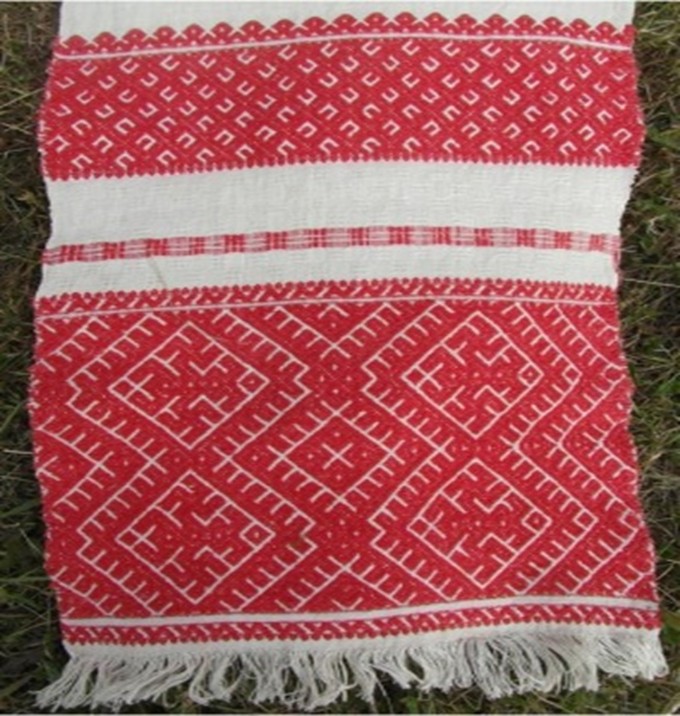
Samples of patterned weaving produced by the Udora Komi were regularly documented by ethnographers and collectors throughout the twentieth century. Woven items collected along the Vashka and Mezen rivers are now held in major national and regional museums in Russia, as well as in museum collections abroad (Hungary, Finland, Estonia, Germany). Nevertheless, to this day, no specialized studies have been devoted to this unique artistic tradition. The reason for this “lack of scholarly attention” on the part of ethnographers and art historians likely lies in the fact that nearly all collectors have regarded Udora decorative weaving as a tradition borrowed from the Russian population of the Northern Dvina basin. It is quite possible that the emergence of patterned weaving in Udora was directly connected to the influx of Old Believer peasant settlers from the Pinega and Northern Dvina regions who arrived on the Vashka in the 1860s. Undoubtedly, the technological language used to execute ornamental motifs and narrative compositions in Udora textiles is closely related to the work of Vologda and Arkhangelsk craftswomen, since the inhabitants of the Vashka and Pinega rivers share a common historical and cultural environment within the Northern Dvina basin. However, Komi craftswomen did not borrow Russian patterns themselves; rather, they adopted the technological language of producing woven ornamented items. There is reason to believe that in the first half of the twentieth century, a distinctive multicolored ornamental style developed in the patterned weaving of the Udora Komi—one that is uncharacteristic not only of Russian craftswomen but also of other ethnographic groups of the Komi. This article presents a concise history of the ethnographic study of Udora Komi patterned weaving in the twentieth century, as well as an attempt to describe the unique multicolored decorative canon of textile ornamentation created by Komi craftswomen of the Vashka River basin. The article also formulates a hypothesis regarding the origins of the artistic tradition of multicolored patterned weaving among the Udora Komi in the first half of the twentieth century.
Downloads
References
Belitser V. Etnograficheskie raboty v Udorskom raione Komi ASSR v 1952 g. Brief Communications of the Institute of Ethnography USSR Academy of Sciences. Moscow: Nauka. 1953. Is.19, pp.16-27.
Belitser V. Ocherki po etnografii narodov komi: XIX – nach. XX v. Moscow: Nauka. 1958. 394 p.
Gribova L. Dekorativno-prikladnoe iskusstvo narodov komi. Moscow: Nauka. 1980. 240 p.
Gribova L., Savel’eva E. Narodnoe iskusstvo komi. Moscow. 1992. 190 p.
Egorov A. Vklad vengerskogo etnografa Benedeka Baratoshi-Baloga v izuchenie traditsionnoj kul’tury finno-ugorskih narodov. Bulletin of the AS of the Republic of Bashkortostan. 2015. Vol.20, no.4, pp.68-73.
Zemtsova I., Sharapov V. Etnograficheskoe kartografirivanie narodnogo izobrazitel’nogo iskusstva komi. In: The Role of Visual Sources in the Study of Regional History. Syktyvkar. 2017, pp.23-27.
Zenovskaya V. Tkachestvo. In: Historical and Cultural Atlas of the Komi Republic. Moscow: Drofa Publ. 1997. Рp.272-274.
Zyriane – narod darovityi. Pyankova T., Sharapov V., Korovina E., Yurkina G., Rafikov Zh., Fefilova N. Syktyvkar: Komi Republican Print. House.2015. 200 p.
Klimova G. Tekstilnyi ornament komi. Syktyvkar: Komi Book Publishing House. 1984. 144 p.
Kozhevnikova L. Narodnoe tkachestvo Kokshen’gi (Vologodskaya oblast’). In: Proceedings of the Research Institute of Art Industry. Moscow: NIIHP Publ. 1967. Iss 4. Рp.213-236.
Kolchina E. Polevye issledovaniya M.A.Braun traditsionnoj kul’tury naroda komi. In: Essays on the History of Studying Komi Ethnography. Syktyvkar: Kola Publ. 2007. Рp.164-180.
Korolyova N. Narodnoe iskusstvo permskih finno-ugrov XIX-XX vv.: komi, komi-permyakov, udmurtov. PhD diss. in Аrt Studies. Moscow. 1968. 288 p.
Leete A., Lipin V. O metodike I rezul’tatah issledivamij etnorgaficheskih ekspeditsij Estonskogo natsional’nogo muzeya po etnorgaficheskim gruppam komi. In: Essays on the History of Studying Komi Ethnography. Syktyvkar: Kola Publ. 2007. Рp.307-324.
Petrov B. Dorogoj ottsov. Syktyvkar: Komi Book Publ. House. 1976. 72 p.
Sharapov V. “Zyryanskaya” ekspeditsiya B. Baratoshi-Baloga na Vashku i Mezen’ v 1911 g. In: 13th Congress of Anthropologists and Ethnologists of Russia: Proceedings. Moscow-Kazan: IEA RAN, KFU, Institute of History of the Academy of Sciences of the Republic of Tatarstan. 2019. Рp.237-238.
Shipunova G. Komi-oblasthoj muzej. Soviet ethnography. 1931. No.1–2, pp.182–184.
Shipunova G. Narodnoe iskusstvo komi. Soviet ethnography. 1960. No.2, pp.57–71.
Downloads
Published
Issue
Section
License
Copyright (c) 2026 V. Sharapov

This work is licensed under a Creative Commons Attribution-NonCommercial-NoDerivatives 4.0 International License.