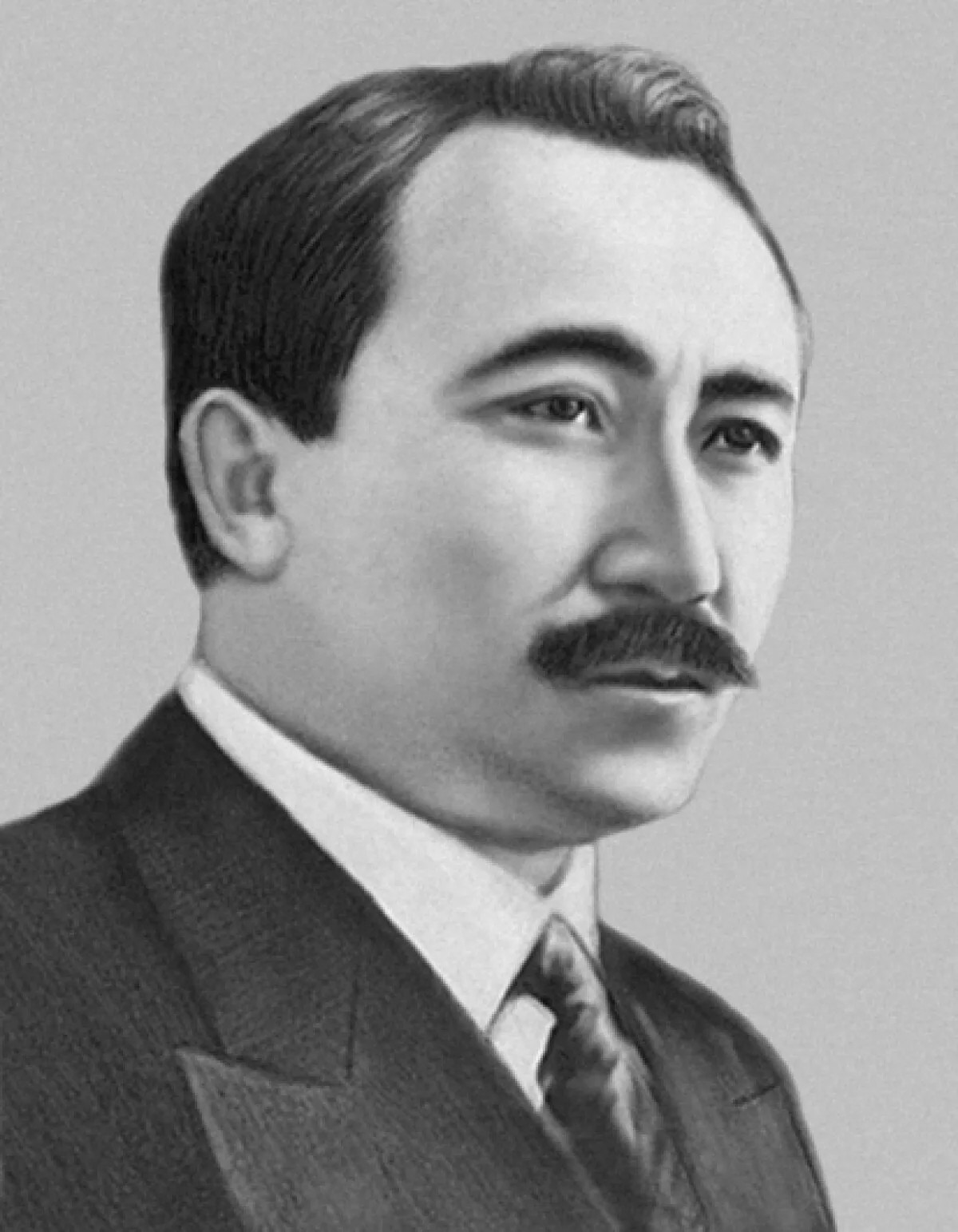
S. Seifullin’s novel The Thorny Path in the context of studying the role of personality in history.
Research Article
Views: 354 / PDF downloads: 373 / PDF downloads: 73DOI:
https://doi.org/10.32523/3080-129X-2025-153-4-147-1691Keywords:
Alash movement, historical source, Saken Seifullin, Soviet ideology, textual analysis, “Thorny Path”Abstract
The 21st century marks a period of unprecedented scientific advancement on a global scale. This is due to the emergence and development of modern technologies, which have led to the creation of innovative technologies and professions that serve humanity. Furthermore, various scientific fields are interconnected, resulting in groundbreaking research. In this context, the field of history is increasingly intertwined with other disciplines, leading to an abundance of new data and the development of theoretical and methodological approaches. Consequently, new scholarly works have emerged in the field of personology, a branch of historical science. Authors in this field emphasize the historical significance of personology in national history from a scientific perspective. This is because every moment and event in life involves people, and as a result, these periods become history. From this perspective, this scientific article conducts theoretical and methodological analyses at a scientific level in the field of personology. Moreover, the researcher’s focus on systematically examining and analyzing the past is of particular importance. The article examines a historical and textual analysis of Saken Seifullin’s novel “Thorny Path” (Tar Zhol, Taigak Keshu), a prominent figure of Alash who fought for the country’s independence. The history of writing and publication of the novel is analyzed, especially the original manuscript written in Arabic script in Kyzylorda in 1927, and compared with the editions of 1936, 1960, 1977, 1988, 2009, and 2012, highlighting textual differences among the later editions. The impact of Soviet ideology on the content of the novel through alterations introduced in later editions is thoroughly investigated. Additionally, the article discusses information about Alash figures and the author’s viewpoints presented in the work. The study reveals that this novel is not only a work of fiction but also a significant source of historical and political events in Kazakhstan in the early 20th century. Editorial revisions that distorted the author’s intent are identified, and the importance of achieving historical justice is emphasized. A theoretical and methodological analysis was conducted within the framework of personality studies. The exploration of Saken Seifullin’s work holds significant value not only for the field of literary studies but also as an essential source for the history of Kazakhstan. The results of this research represent an important and relevant step toward restoring historical justice and fostering an objective understanding of the past. This study highlights the importance of textual analysis and the necessity for precision in working with historical sources. Furthermore, it emphasizes the contribution of personality studies to the development of historical knowledge. This work represents a meaningful scholarly effort in the pursuit of an accurate evaluation of the past and the formation of national consciousness.
Downloads
References
Aladağ H. H. Tarihî Figürlerin Psikobiyografisi: Tarihî Analizlerde Psikolojik Yaklaşımların Entegrasyonu. Vakanüvis – Uluslararası Tarih Araştırmaları Dergisi. 2024. No.1, pp.1-52. https://doi. org/10.24186/vakanuvis.1415401 (in Turkish)
Meirbekov A. Toponymic Heritage of Khoja Ahmed Yasawi. Journal of Turkish Culture and Haji Bektash Veli Research. 2023. No.105, pp.287-297. https://doi.org/10.34189/hbv.105.012 (in English)
Abzhanov H. Tarihşy. Almaty: Algorithm Publ. 2023. 488 p. (in Kazakh)
Baitursunov A. Revoliutsiia i kazakhi. Life is National. 1919. No.8. (in Russian)
Danilevskii I.N. Istoricheskaia tekstologiia. Moscow: Publishing House of the Higher School of Economics. 2018. 556 p. (in Russian)
Kakishev T. Qyzyl sūñqar. Almaty: Kazakhstan Publ. 1968. 288 p. (in Kazakh)
Kakishev T. Sahara sūñqary. Almaty: Kazygurt Publ. 2004. 406 p. (in Kazakh)
Kakishev T. Säken jaiyndağy soñğy derekter. Кazakh literature. 1991. No.4, pp. 6-7. (in Kazakh)
Kakishev T., Akhmet K. Tar jol, taiğaq keşudın tağdyry: Kömekşı oqu qūraly. Almaty: Category Publ. 1997. 224 p. (in Kazakh)
Kabdolov Z. Söz önerı. Almaty: School Publ. 1983. 231 p. (in Kazakh)
Kamzabekuly D. Ruhaniat: Maqalalar men zertteuler. Almaty: Education Publ. 1997. 272 p. (in Kazakh)
Kirabaev S. Säken Seifullin. Almaty: Writer Publ. 1974. 432 p. (in Kazakh)
Kozybaev M. Өrkeniet zhәne ұlt. Almaty: Kozdik ‒ Dictionary. 2001. 368 р. (in Kazakh)
Repina L., Zvereva V., Paramonova T. Istoriia istoricheskogo znaniia. Mosсow: İurait Publ. 2012. 370 p. (in Russian)
Seifullin S. Tar jol, taiğaq keşu turaly. Ädebiet maidany. 1929. No.7. (in Kazakh)
Seifullin S. Tar jol, taiğaq keşu (arab grafikasy). Kyzylorda: Kazakh USSR State Publishing House. 1927.421 p (in Kazakh)
Seifullin S. Tar jol, taiğaq keşu (latyn grafikasy). Almaty: Kazakhstan Literature Publishing House. 1936. 526 p. (in Kazakh)
Seifullin S. Tar jol, taiğaq keşu. Almaty: Kazakh State Art Publishing House. 1960. 483 p. (in Kazakh)
Seifullin S. Tar jol, taiğaq keşu. Almaty: Writer Publ. 1977. 401 p. (in Kazakh)
Seifullin S. Tar jol, taiğaq keşu. Almaty: Writer Publ. 2009. 432 p. (in Kazakh)
Seifullin S. Öleñder men dastandar. Almaty: Writer Publ. 2005. 448 p. (in Kazakh)
Toqaev Q. Ūlttyq qūryltaiğa arnağan sözı.. https://www.akorda.kz/kz/memleket-basshysy-kasymzhomart-tokaevtyn-ulttyk-kuryltaydyn-adiletti-kazakstan-adal-azamat-atty-ekinshi-otyrysyndasoylegen-sozi-1752959 Date of request: 18.04.2025. (in Kazakh)
Published
Issue
Section
License
Copyright (c) 2025 G. Ibrayeva, K. Seitkazina , A.Taşağıl

This work is licensed under a Creative Commons Attribution-NonCommercial-NoDerivatives 4.0 International License.