The history of Genghis Khan in the Jami' at-Tawarikh and his Political and sociogenetic legacy in the Kazakh steppe
Research Article
Views: 2270 / PDF downloads: 399DOI:
https://doi.org/10.32523/3080-129X-2025-153-4-111-128Keywords:
Rashid ad-Din, Genghiskhan, Mongols, nirun, Kazakhs, Uzbek, Jochi, genetics, genealogy, successionAbstract
This article explores the history of Genghis Khan and his political as well as socio-genetic legacy in the Kazakh steppe, based on the historical work Jāmiʿ at-Tawārīkh («Compendium of Chronicles») authored by Rashid ad-Din. Rashid ad-Din was a high-ranking statesman and vizier of the state Hulaguids, who obtained information directly from official Mongol chronicles and the oral narratives of the nobility. As such, his work constitutes a unique historical source that offers profound and comprehensive insight into the origins and life of Genghis Khan, the political landscape of the time, and intertribal relations on the eve of the Mongol invasion. The aim of this study is to employ Jāmiʿ at-Tawārīkh as a key narrative source for the ethnopolitical history of Kazakhstan during the 13th-century Mongol conquest and to reconstruct the ethnic processes that took place during that period. Findings and conclusions. The research confirms that Jāmiʿ at-Tawārīkh is an exceptionally significant written source for studying the Mongol invasions in 13th-century Central Asia, as well as for understanding the ethnopolitical transformations that occurred in the territory of modern-day Kazakhstan. Based on specific historical data, the study investigates the origins, migrations, and political histories of tribes and clans that played a pivotal role in shaping the ethnic foundation of the Kazakh people - such as the Naimans, Kereits, Kipchaks, Jalairs, Qongyrats, Argyns, and others. The article also addresses the genealogy and historical role of Genghis Khan and his descendants - the niruns - from whom all Kazakh khans (the Töre dynasty) eventually emerged. Furthermore, the study examines the political and ethno-social processes of the 13th–14th centuries, a formative period that significantly influenced the development of Kazakh statehood. Genghis Khan is portrayed not only as a conqueror but also as a historic figure who established a system of state governance within the turko-mongol world. The article also discusses the historical role of his descendants in Central Asia and their contribution to the formation of the Kazakh khanate. The intertribal relations, systems of power, governance models, and legal norms described in Jāmiʿ at-Tawārīkh served as foundational elements for the future political culture of the Great Steppe, including that of the Kazakh khanate. The unique information preserved in Rashid ad-Din’s work provides a deeper understanding of the processes of origin and ethnogenesis of the Kazakh people. This article represents an attempt at conceptual re-evaluation of the legacy of Genghis Khan from the standpoint of contemporary scholarship, in the context of ethnogenetic and political changes brought about by the Mongol conquest in the territory of present-day Kazakhstan.
Downloads
References
Akhinzhanov S. Kypchaki v istorii srednevekovogo Kazakhstana. Alma Ata: Science Publ. 1989. 293 p.
Akhmedov B. Gosudarstvo kochevykh uzbekov. Moscow. 1965. 196 p.
Valikhanov Ch. Kirgizskoe rodoslovie. Collected works in five volumes. Vol.2. Alma-Ata: Main edition of the Kazakh Soviet Encyclopedia, 1985. 2nd ed. additional and revised. Рp.148-166.
Vernadskii G. Mongoly i Rus’. Tver: LEAN, Moscow: AGRAF. 1997. 480 p.
Vyatkin M. Ocherki po istorii Kazakhskoi SSR s drevneishikh vremen po 1870 g. Vol. 1. USSR Academy of Sciences, Institute of History and Kazakhstan branch, Moscow: OGIZGospolitizdat. 1941. 368 p.
Grekov B., Iakubovskii A. Zolotaia Orda i ee padenie. Moscow-Leningrad. 1950. 478 p.
Grumm-Grzhimailo G. Zapadnaia Mongoliia i Uriankhaiskii krai. Leningrad. 1926. Vol.II. 900 p.
Zhabagin M., Sabitov Zh., Tarlykov P. et al. Srednevekovye mongol’skie korni Y-khromosomnykh liniy iz Iuzhnogo Kazakhstana. BMC Genetics. 2020. Vol.21. Suppl.1. Art.87. https://doi.org/10.1186/s12863-020-00897-5 DOI: https://doi.org/10.1186/s12863-020-00897-5
Karpini Plano Dzhovanni del. Istoriia mongolov. de Rubruk G. Puteshestvie v vostochne strany. 4th ed. Moscow: Mysl’. 1997. 461 p.
Kinayatuly Z. Qazaq memleketı jäne Joşy han. (Tarihi-saraptamalyq zertteu). Astana: Elorda. 2004. 344 p.
Mukanov M. Etnicheskii sostav i rasselenie kazakhov Srednego Zhuza. Alma Ata: Nauka Publ. 1974. 200 p.
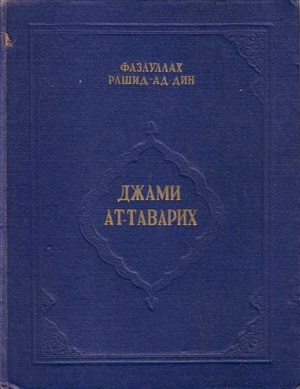
Rashid ad-Din Dzhamiʿ at-tavarih. Sbornik letopisei. Vol.1. B.2. Moscow-Leningrad: Publishing House of the USSR Academy of Sciences. 1952. 315 p.
Sabitov Zh., Baimukhanov N. Niruny i subklad C2a3-F4002 (starklaster). Russian Journal of Genetic Genealogy. 2014. Vol.6, no.2. 2015. Vol.7, no.1.
Savelev P. Bukhara v 1835 godu: S prisoyedineniem izvestii obo vskh evropeiskikh puteshestvennikakh, poseshchavshikh etot gorod do 1835 goda vkliuchitel’no. P. Savelyev. St. Petersburg. 1836. 26 p.
Tokayev K. Toqaevtyn’ törtinshi Ulttyq quryltai otýrysyndagy sóilegen sózi, 14 naýryz 2025. Accessed via: https://www.akorda.kz/kz/memleket-basshysy-kasym-zhomart-tokaevtyn-ulttyk-kuryltaydyn-tortinshi-otyrysynda-soylegen-sozi-14242
Ushnitskii V. Srednevekovye narody Tsentral’noi Azii (voprosy proiskhozhdeniia i etnicheskoĭ istorii tiurko-mongol’skikh plemen). Kazan: Publishing house "Fen" of the Academy of Sciences of the Republic of Tatarstan. 2009. 116 p.
Fazlallah ibn Ruzbikhan Isfahani Mikhman-name-yi Bukhara (Zapiski bukharskogo gostia). Translated by R. P. Dzhalilova. Moscow: Nauka Publ. 1976. 526 p.
Published
Issue
Section
License
Copyright (c) 2025 G. Assanova, J. Kaliyev

This work is licensed under a Creative Commons Attribution-NonCommercial-NoDerivatives 4.0 International License.