
«Beat the Communists»: the mood of the unemployed population of the Siberian region according to the OGPU of the USSR
Research Article
Views: 341 / PDF downloads: 202 / PDF downloads: 104DOI:
https://doi.org/10.32523/3080-129X-2025-153-4-74-90Keywords:
unemployment, labor exchanges, memo, industrialization, unemployed population, OGPU, trade unions, five-year plan, SiberiaAbstract
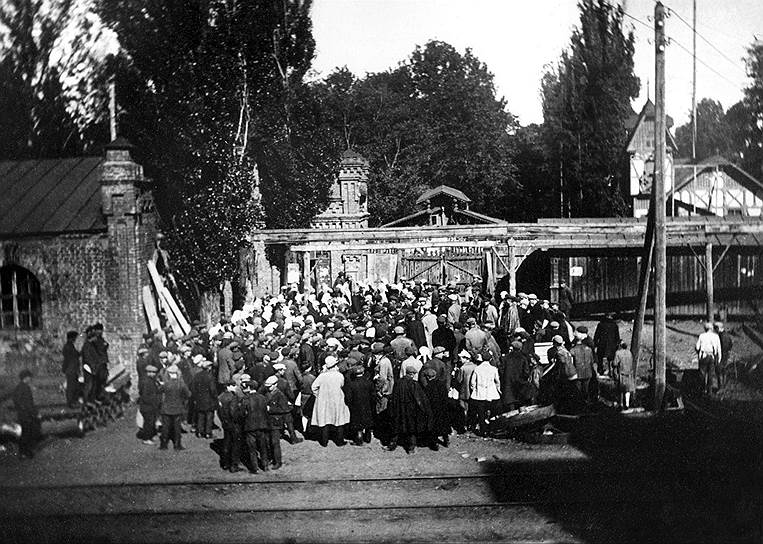
In the 1920s, the Soviet state faced a very serious socio-economic phenomenon — mass unemployment, caused by a number of reasons. Throughout the 1920s, the number of unemployed people grew annually, and by the end of the period under review, it reached 1.7 million people. In 1929, the situation became even more acute due to the collectivisation that began in the country and, as a consequence, the aggravation of the food problem and another massive influx of peasants into the cities. By the end of the decade, unemployment had become stagnant. In 1927, the state took some measures that created obstacles for certain categories of the population in their search for work. The rejection of economic factors in regulating the labour market in favour of administrative methods, food, material, domestic and other difficulties turned the multimillion-dollar reserve army of labour into a disloyal group of people, which was characterised by protest behaviour, which became acute in certain regions of the USSR. In addition, according to OGPU employees, labour exchanges posed a particular danger, as they concentrated large crowds of people daily. To prevent various kinds of protests, the unemployed were under special attention of the OGPU bodies, whose responsibilities included, among other things, informing about the moods of people without work. For this purpose, the Chekists monthly compiled memorandums about the moods, statements, and ideas of this target group. This work introduces for the first time into scientific circulation an operational summary dated June 15, 1929, stored in the State Archive of the Novosibirsk Region in the fund of the Labour Department of the Executive Committee of the West Siberian Regional Council of Workers’, Peasants’, and Red Army Deputies. The purpose of the work is to show the moods and behaviour of the unemployed in the Siberian region in mid-1929, i.e., during the first five-year plan, when for the first time in the 1920s, the demand for labour exceeded its supply, but the problem was not overcome. Based on the memorandum, which provides rich material for study, an attempt is made to identify the spectrum of public moods, to consider the cumulative factors that influenced the formation of the moods and behaviour of the unemployed in the Siberian region. Due to the published memorandum, it is possible to analyse the attitude of the unemployed population towards the country’s leadership, towards the activities carried out in the country, including collectivisation, models of protest against the authorities, etc. It is concluded that the unfavourable situation of the unemployed, including the lack of food, the absence of jobs, earnings, the need for registration by labour exchanges, and reforms, led to various conflicts with labour exchange employees, clashes and fights with police officers, and riots. Among the people, ideas about uprisings against the Soviet authorities were popular, and calls for military struggle against the communists spread. Such moods in the Siberian region, according to the OGPU, were widespread.
Downloads
References
Kekalova L. Elimination of Unemployment in Siberia (1922–1930). Dissertation for the degree of Candidate of Historical Sciences. Novosibirsk. 1984. 222 p.
Potapova N. Unemployment in the USSR in the 1920s: Ideological Doctrine and Economic Reality. Historical courier. 2021. No.6(20), pp.134–141. DOI: https://doi.org/10.31518/2618-9100-2021-6-11
Rogachevskaya L. Elimination of unemployment in the USSR 1917–1930. Moscow: Nauka. 1973. 382 p.
The National Economy of the USSR for 70 Years: Jubilee Statistical Yearbook. In: USSR State Statistics Committee. Moscow: Finance and Statisticia. 1987. 766 p.
«Top Secret»: Lubyanka to Stalin on the situation in the country (1922–1934). Vol. 1, 1922–1923. Part 2. Moscow: IRI RAN. 2001. 1093 p.
Published
Issue
Section
License
Copyright (c) 2025 N. Potapova

This work is licensed under a Creative Commons Attribution-NonCommercial-NoDerivatives 4.0 International License.